
Under Its Own Weight
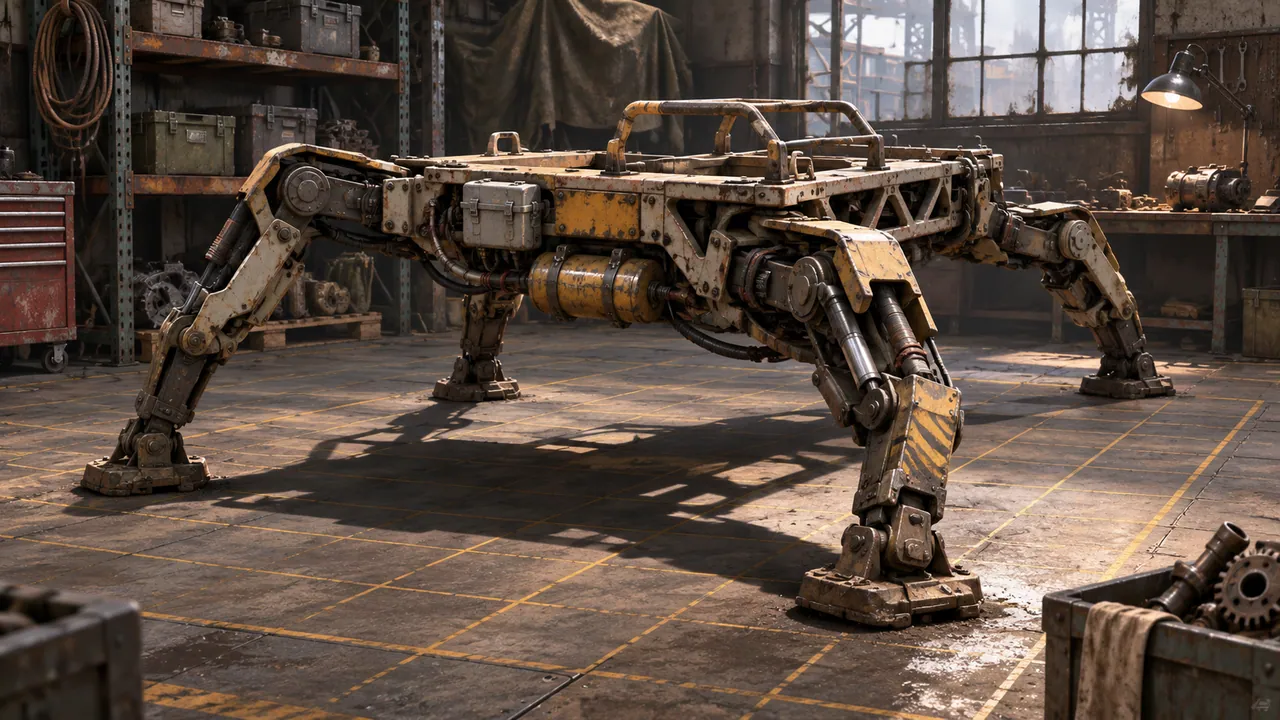
The first machine trial in Frame With No Hinge does not take the rebuilt frame out of the bay. The frame makes a short move between two points on the floor and returns to its first position. A temporary support stands close to the wing, leaving room for the movement while preserving an earlier place to compare. We made this stage because a convincing fit gave the player very little information about what the frame would do after its weight came off the stand. We want to preserve enough of that first result to help with a later repair.
Establish two places to observe the first move
The near rail gives a side view of the leg beneath the housing. The rear rail gives a clearer view of a mark on the underside of the wing. You can reach either rail while the frame is resting. Compare the mark and the edge of the temporary support from the near side. Move to the rear view to see how much of the space underneath remains readable. The trial record shows both places before the movement begins. This gives the player a way to remember where the outer structure stood before some of the work moves behind the shell. The floor retains a short line to help relate these two distances.
Let the load settle for a second view
Start by bringing the wing away from the old support just enough to see a changed shadow underneath. The move is small in the prototype, but you can see where the repaired joint begins to carry the new position. The other side of the frame will travel later in the proposed test. Stop after the first short movement and read the gap beside the temporary support. We keep the initial view available so a player can distinguish a motion already present from an effect that appeared only while the weight was moving. If a part seems to settle into an unexpected place, you can take the rear view before letting the machine continue.
Compare a return to a known mark
On the second part, the old mark under the wing becomes visible again. If the frame returns to the same outline from the rear rail, there is still a reason to compare the joint from near the floor. The surface could settle differently under weight without changing the appearance of the bigger shape. See which side of the gap gets narrower first and write down the point at which that happens. The trial gives the player a short space between the two positions so they can reproduce that point before going back to the workbench. A successful repair leaves a result a player can recognize when they visit the same place again.
Connect the test to the missing part
Frame With No Hinge describes where the weight is carried before the replacement is set. Reading a Part by Its Outline covers one of the spare shapes a player may choose. A Latch Between Materials explains a connection useful at the shell but not necessarily at a support. In the next test we will move the temporary stand along the rail without changing the replacement. That could change which shadow first becomes visible. We want to see whether a person can keep track of the original mark while those parts change and still decide if the frame can return to its earlier position. The small trial is a design for a fictional game. It gives the repair a result without asking a player to interpret a long movement at once.
Save the view at the moment the old support first clears the wing. If the gap changes again after the first step, that view can show which part of the new connection was already carrying the frame.